



Henrico County, Virginia, 2027–2031 Capital Improvement Plan (CIP) Alert
FirmoGraphs monitors Capital Improvement Plans across hundreds of municipalities in the United States, delivering structured intelligence to architecture, engineering, and construction (AEC) firms and infrastructure service providers. This CIP Alert compares Henrico County’s 2026–2030 and 2027–2031 five-year capital plans, surfacing the most significant shifts in infrastructure investment for business development and market planning.
Located in central Virginia and completely surrounding the City of Richmond on three sides, Henrico County is one of the commonwealth’s most economically dynamic jurisdictions. In the CIP covering fiscal years 2027–2031, Henrico County plans to invest $3.71B in capital improvements — up from $3.01B in the prior five-year plan.[1] The current CIP consolidates spending into 114 distinct projects, compared to 157 previously, reflecting a strategic shift toward larger, more impactful program investments. The average project value rose from $19.2M to $32.5M.
How Did Henrico County’s Capital Spending Change Between the Last Two CIPs?
| Metric | 2026–2030 CIP | 2027–2031 CIP | Change |
|---|---|---|---|
| Total CIP Value | $3.01B | $3.71B | +$694.4M (+23.0%) |
| Distinct Project Count | 157 | 114 | −43 (−27.4%) |
| Average Project Value | $19.2M | $32.5M | +$13.3M (+69.3%) |
Henrico County’s total planned capital investment grew by $694.4M (+23.0%) between its 2026–2030 and 2027–2031 CIPs, signaling an accelerating pace of infrastructure investment across the county.[1] This growth is accompanied by a significant consolidation of the project portfolio: the number of distinct projects declined from 157 to 114 (−27.4%), pushing the average project value from $19.2M to $32.5M — a 69.3% increase in average scale.
This pattern is consistent with Henrico County prioritizing fewer, larger, and more transformative capital programs rather than spreading resources across a wide array of smaller initiatives. The restructuring of transportation investment — moving from a “Streets and Roads” category into a broader “Highways, Freeways and Turnpikes” umbrella at $1.70B — is the single largest driver of both the dollar increase and the project count consolidation seen between the two plans.[1]
Which Departments and Business Areas Saw the Largest Changes in Henrico County’s CIP?
| Business Area | 2026–2030 CIP Value | 2027–2031 CIP Value | Change ($) | Change (%) |
|---|---|---|---|---|
| Educational Facilities | $272.3M | $692.3M | +$420.0M | +154.3% |
| Drinking Water Conveyance | $337.6M | $377.7M | +$40.1M | +11.9% |
| Wastewater Conveyance | $313.1M | $240.5M | −$72.6M | −23.2% |
| Public Safety Facilities | $133.6M | $119.3M | −$14.3M | −10.7% |
| Wastewater Treatment | $80.0M | $114.0M | +$34.0M | +42.5% |
Key movements across Henrico County’s business areas include:
- Educational Facilities surged by +$420.0M (+154.3%), making it the fastest-growing and second-largest comparable sector in the current plan, driven by major school replacement and renovation programs.[1]
- Drinking Water Conveyance grew modestly by +$40.1M (+11.9%), reflecting continued long-term water infrastructure investment, led by the Eastern Water Transmission Main.[1]
- Wastewater Conveyance declined by −$72.6M (−23.2%), though it still represents $240.5M in planned investment across 19 projects.[1]
- Public Safety Facilities decreased slightly by −$14.3M (−10.7%) to $119.3M, remaining a consistent strategic priority.[1]
- Wastewater Treatment increased by +$34.0M (+42.5%), centered on major flow equalization basin upgrades.[1]
What Are the Largest Projects in Henrico County’s 2027–2031 CIP?
The 2027–2031 CIP’s five largest projects by planned value are:[1]
- Transportation Projects – Multiple — $1.70B (Highways, Freeways and Turnpikes) — A consolidated multi-project transportation bundle encompassing road, freeway, and multi-modal infrastructure work across the county.
- Hermitage High School Replacement Planning & Construction (Project 08775) — $285.0M (Educational Facilities) — A complete replacement of Hermitage High School, one of the largest single K–12 capital projects in county history.
- Eastern Water Transmission Main – Long Term Option (Project 09858) — $282.0M (Drinking Water Conveyance) — A critical long-term water supply infrastructure investment serving eastern Henrico County.
- Roof Replacements (00518) / Mechanical Improvements (00527) — $105.0M (Educational Facilities) — Countywide school facility maintenance covering roofing and mechanical systems across multiple campuses.
- Gillies Creek SPS Flow Equalization Basin (Project 07029) — $90.0M (Wastewater Treatment) — Sewer pump station and flow management capacity infrastructure.
How Is Henrico County’s CIP Governed and Approved?
Henrico County’s Capital Improvement Program is developed through an annual process coordinated by the Office of Management and Budget.[2] County departments submit capital project requests that are reviewed, prioritized, and assembled into a proposed CIP by the County Manager’s office. The Planning Commission holds public hearings — typically in March — to receive community input on the proposed plan.
The Henrico County Board of Supervisors formally adopts the CIP as part of the annual budget, typically in April, after conducting its own detailed budget review and public hearings.[3] Capital funds are then appropriated by the Board in June. Henrico operates under a County Manager form of government — the first in Virginia to adopt this model (in 1933) and still the only county in the state to use it — providing professional administrative continuity that supports disciplined, multi-year capital planning.[4]
What Is the History of Henrico County and Its Infrastructure?
Henrico County is one of America’s oldest jurisdictions. In 1611, Sir Thomas Dale established Henrico Towne as Virginia’s second permanent English settlement, naming it in honor of Henry Frederick, Prince of Wales and son of King James I.[5] In 1634, it was designated as one of the eight original shires of Virginia — making it among the earliest counties in the entire country.[6] Today, Henrico County spans 244 square miles, completely surrounds the City of Richmond on three sides, and is home to approximately 340,000 residents.
Henrico’s infrastructure legacy is substantial. It is one of only two counties in Virginia that maintains its own road system, with the Department of Public Works overseeing more than 1,300 miles of roadway. The county hosts Richmond International Airport and an Amtrak station. Henrico’s long track record of well-planned growth — balancing residential communities, farmland, and commercial development — is reflected in its multi-billion dollar CIP, which ensures the county’s infrastructure keeps pace with one of the Mid-Atlantic region’s most consistently growing suburban communities.
Fun Facts About Henrico County
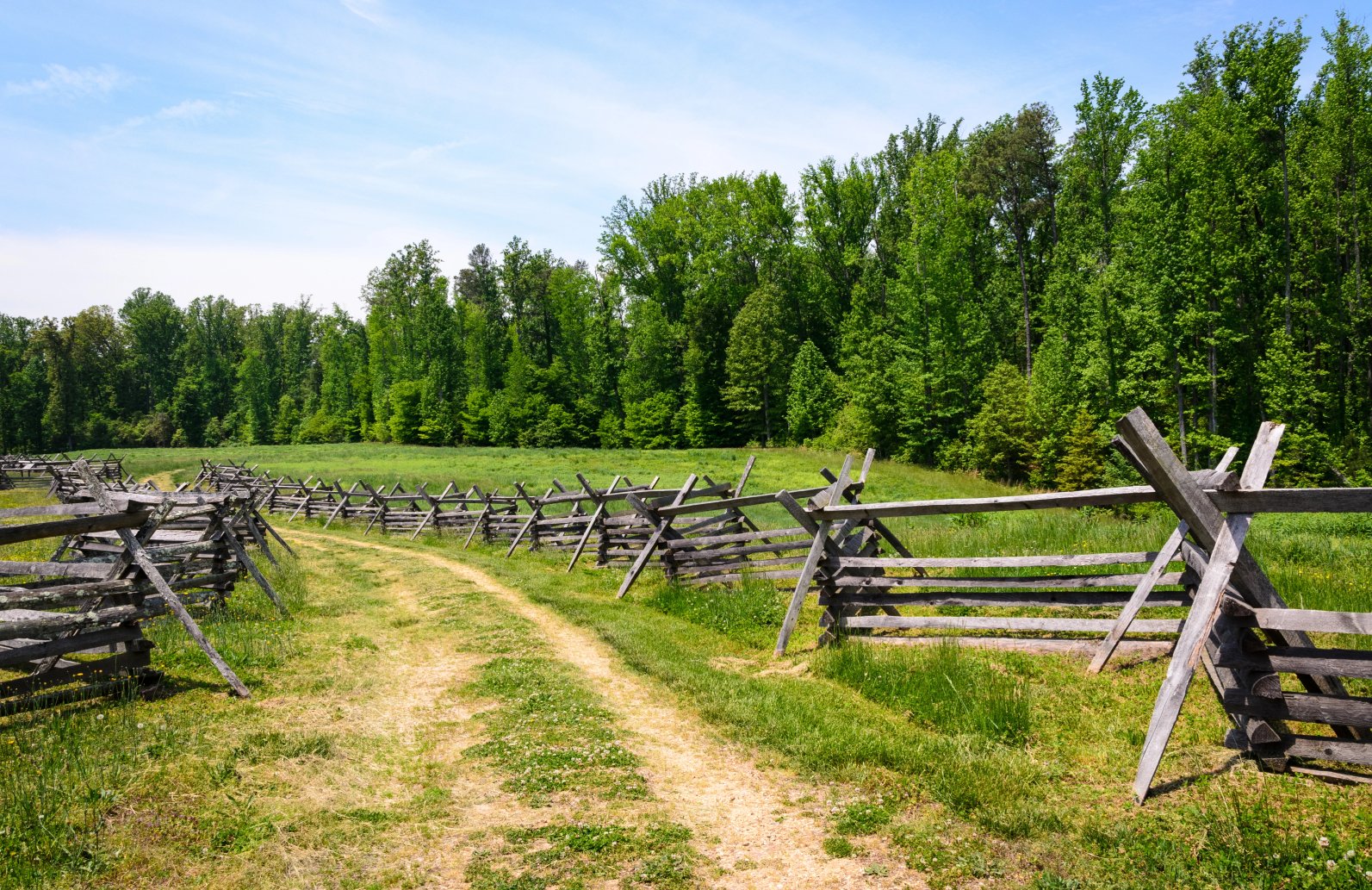
- Henrico County has the greatest number of Civil War battlefields of any county in the United States.[4]
- At the Civil War Battle of New Market Heights on September 29, 1864, fourteen African-American soldiers were awarded the Medal of Honor — more than after any other single Civil War engagement.[7]
- The USS Henrico (APA-45) carried elements of the U.S. Army’s 1st Division (“Big Red One”) to the D-Day assault on Omaha Beach during the World War II invasion of Normandy, France.[8]
- Three Chopt Road — a major Henrico corridor — originated as an ancient Native American trail marked by three notches carved into trees at intervals along the path.[9]
- In 1933, Henrico was the first county in Virginia to adopt the County Manager form of government, and it remains the only county in the state to use it today.[4]
- Railroad artillery was used for the first time in the history of warfare during the Civil War Battle of Savage’s Station, fought in Henrico County.[4]
- Henrico County maintains the lowest real estate property tax rate among Virginia’s 10 largest localities and a cost of living index consistently below the national average.[10]
How FirmoGraphs Can Help
FirmoGraphs is a data-driven business intelligence and data science firm specializing in the United States utility and industrial infrastructure market. FirmoGraphs helps AEC firms, equipment manufacturers, and infrastructure service providers apply BI to better serve their customers — enabling more precise messaging, faster market identification, and higher win rates in competitive public-sector markets.
Through its CIP Alert platform, FirmoGraphs tracks capital improvement plans across hundreds of municipalities and public agencies in the United States, systematically comparing year-over-year changes in project scope, sector spending, and investment priorities. For firms targeting the Virginia market — or tracking Henrico County’s $3.71B pipeline across transportation, education, water, and public safety — FirmoGraphs delivers the structured intelligence needed for proactive, data-driven business development.
Ready to track Henrico County and other CIPs in your target markets?
Visit firmographs.com or request a meeting to learn how FirmoGraphs can support your AEC business development team.
Henrico County, VA CIP Alert — FAQs
References
- Henrico County, Virginia. Capital Improvement Program, FY 2026–2027 through FY 2030–2031 (2027–2031 CIP) and Capital Improvement Program, FY 2025–2026 (2026–2030 CIP). Office of Management and Budget. henrico.gov/finance/divisions/office-of-management-and-budget/cip/. All project values, project counts, and business area spending figures are derived from FirmoGraphs’ analysis of the official CIP project-level data exports.
- Henrico County, Virginia. Capital Improvement Program. Office of Management and Budget. henrico.gov/finance/divisions/office-of-management-and-budget/cip/. Accessed May 2026.
- Henrico County Government. “Board of Supervisors Approves Budget.” The Henrico Citizen, April 14, 2026. henricocitizen.com.
- Henrico County, Virginia. “Fun Facts about Henrico.” Official County Website — 400th Anniversary section. henrico.gov/history/recent-history/400th-anniversary/fun-facts-about-henrico/. Accessed May 2026. (Sources: Civil War battlefield count; County Manager first-in-Virginia 1933; Savage’s Station railroad artillery.)
- Henrico County, Virginia. “Henrico’s Milestones.” Official County Website. henrico.gov/history/recent-history/400th-anniversary/henricos-milestones/. Accessed May 2026. (“1611 – Sir Thomas Dale established the second permanent English settlement Henrico, in honor of Henry Frederick, Prince of Wales, son of King James I.”)
- Wikipedia. “Henrico County, Virginia.” en.wikipedia.org/wiki/Henrico_County,_Virginia. (Citing: “In 1634, Henrico was reorganized as Henrico Shire, one of the eight original Shires of Virginia.”) See also: Henrico County Historical Society. henricohistoricalsociety.org.
- Henrico County, Virginia. “Civil War Era.” Official County Website. henrico.gov/history/civil-war-era/. (“At New Market Heights on September 29, 1864, Union black infantry troops dislodged Confederate defenders in a heroic action for which fourteen men received Medals of Honor.”) Accessed May 2026.
- Henrico County, Virginia. “History of the USS Henrico.” Official County Website. henrico.gov/history/recent-history/history-of-the-uss-henrico/. Accessed May 2026. (“HENRICO carried troops of the 16th Regiment, 1st Infantry Division (‘The Big Red One’). These troops assaulted the Easy Red Sector of Omaha Beach.”)
- VPM News. “What’s the deal with Three Chopt Road?” March 31, 2024. vpm.org. See also: Henrico County. “Fast Facts about Henrico.” henrico.gov/communications/fast-facts-about-henrico/.
- Henrico County, Virginia. “Fast Facts about Henrico.” Official County Website. henrico.gov/communications/fast-facts-about-henrico/. (“Henrico County maintains the lowest real estate property tax rate among Virginia’s 10 largest localities and a cost of living index consistently below the national average.”) Accessed May 2026.